

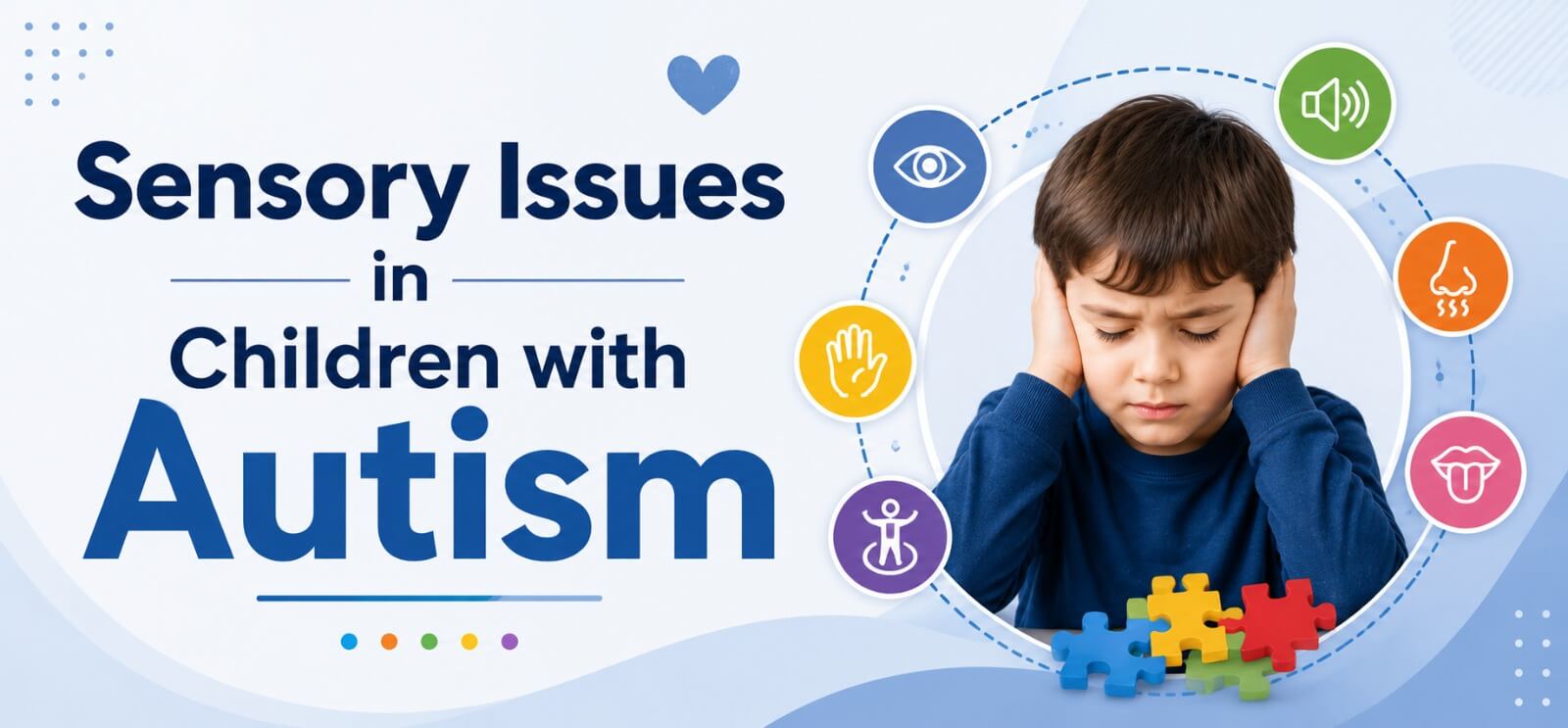
Autism Spectrum Disorder (ASD) affects how children communicate, interact, and respond to their environment. One of the most common challenges faced by children with autism is sensory processing difficulties. Understanding these sensory issues can help parents provide better support and improve their child’s daily experiences.
What Are Sensory Issues?
Children with autism may be either overly sensitive (hypersensitive) or under-sensitive (hyposensitive) to sensory input. They may react strongly to sounds, lights, textures, smells, or touch that others find normal.
Common Sensory Challenges
- Covering ears due to loud sounds
- Avoiding certain clothing textures
- Difficulty tolerating bright lights
- Seeking excessive movement or spinning
- Strong reactions to specific smells or tastes
- Discomfort with physical touch
These sensory challenges can affect learning, social interactions, and everyday activities.
How Can Parents Help?
Creating a predictable environment, identifying sensory triggers, and working with occupational therapists can help children manage sensory difficulties more effectively. Sensory-friendly strategies often improve comfort, behavior, and participation in daily routines.
When to Seek Professional Help
If sensory issues are affecting your child’s communication, learning, or daily functioning, it is important to seek expert guidance. Consulting the best child neurologist in gurgaon can help identify underlying concerns and create an individualized management plan.
Conclusion
Sensory issues are a common part of autism and can significantly impact a child’s quality of life. Early intervention and support from the best child neurologist in gurgaon can help children develop coping skills, improve daily functioning, and reach their full potential.