
Autism Spectrum Disorder (ASD), commonly referred to as autism, is a complex neurodevelopmental condition that profoundly impacts individuals’ lives. Recognizing the signs of autism in your child at an early stage is essential for providing the necessary support and interventions. In this blog, we will be discussing the complex world of autism, exploring its common symptoms, discussing treatment options, and providing information on where to seek help. Through examples and in-depth insights, we aim to equip parents and caregivers with all the knowledge they need to support children with autism.
What exactly is Autism?
Autism is not a disease; it is a lifelong condition that covers a broad spectrum of characteristics and behaviours. The core features of autism include difficulties in social interaction, communication challenges, and repetitive behaviours. It is important to understand the varying degrees of severity within the autism spectrum.
Common Signs and Symptoms of Autism, Explained with Examples:
- Social Interaction Difficulties:
- Example: A 4-year-old child, Arjun, avoids making eye contact with his parents or peers. During playdates, he often plays in isolation, seemingly uninterested in joining group activities.
- Description: Individuals with autism may have limited eye contact and face difficulties in understanding or responding to social cues like facial expressions or gestures. They might struggle to initiate and maintain relationships with others.
- Communication Challenges:
- Example: Priya, a 3-year-old with autism, has limited speech and rarely uses words to express her needs or feelings. She frequently repeats phrases she hears on television.
- Description: Autism can manifest as delayed speech development or difficulties with language. Echolalia, the repetition of words or phrases, is common among children with autism. Gestures like pointing or waving may be limited or absent.
- Repetitive Behaviours:
- Example: Rohan, a 6-year-old with autism, engages in repetitive hand-flapping when excited or anxious. He also insists on following a specific daily routine and becomes distressed if it is disrupted or changed.
- Description: Repetitive behaviours, such as hand-flapping, rocking, or developing intense interests in specific topics or objects, are characteristic of autism. Individuals often find comfort in maintaining specific routines.
Treatment and Support for Autism
While there is no cure for autism, early intervention and appropriate therapies can significantly improve an individual’s development and quality of life. Let’s explore the various aspects of treating and supporting children with autism:
- Early Intervention Services:
- Example: At 18 months, Aarav showed signs of autism, including limited speech and difficulty with social interactions. His parents sought early intervention services.
- Description: Early intervention is crucial. Services may include speech therapy, occupational therapy, and behavioural therapy. Early support can enhance communication skills, reduce challenging behaviours, and promote social interactions.
- Behavioural Therapy:
- Example: Over the course of a year, with the help of Applied Behaviour Analysis (ABA) therapy, Aditi, a 5-year-old with autism, learned to communicate her needs and engage in structured play with her peers.
- Description: ABA therapy focuses on modifying behaviours and teaching new skills. It often involves one-on-one sessions with a trained therapist to address specific areas of concern.
- Medications:
- Example: Aman, a 10-year-old with autism, exhibited severe aggression and anxiety. After consultation with a healthcare provider, he began medication therapy alongside behavioural interventions which improved his condition.
- Description: Medications may be prescribed to manage specific symptoms of autism, such as anxiety, aggression, or hyperactivity. Medication management is typically combined with behavioural therapies and closely monitored by expert doctors.
- Parental Training:
- Example: Maya’s parents participated in parent training sessions that focused on strategies to support her development. They learned how to create a structured environment that minimized sensory sensitivities.
- Description: Parental involvement is crucial. Many treatment programs involve training parents to support their child’s development and manage challenging behaviours at home. This empowerment is invaluable in fostering progress.
- Specialized Schools and Programs:
- Example: Nikhil, a 7-year-old with autism, thrived in a specialized school that offered a structured curriculum tailored to his needs. He made significant gains in communication and social skills.
- Description: Some children with autism benefit from specialized educational programs designed to meet their unique needs. These programs prioritize enhancing communication and social skills in a structured learning environment.
Child Neurology Center in Gurgaon: A Trusted Destination for Autism Treatment
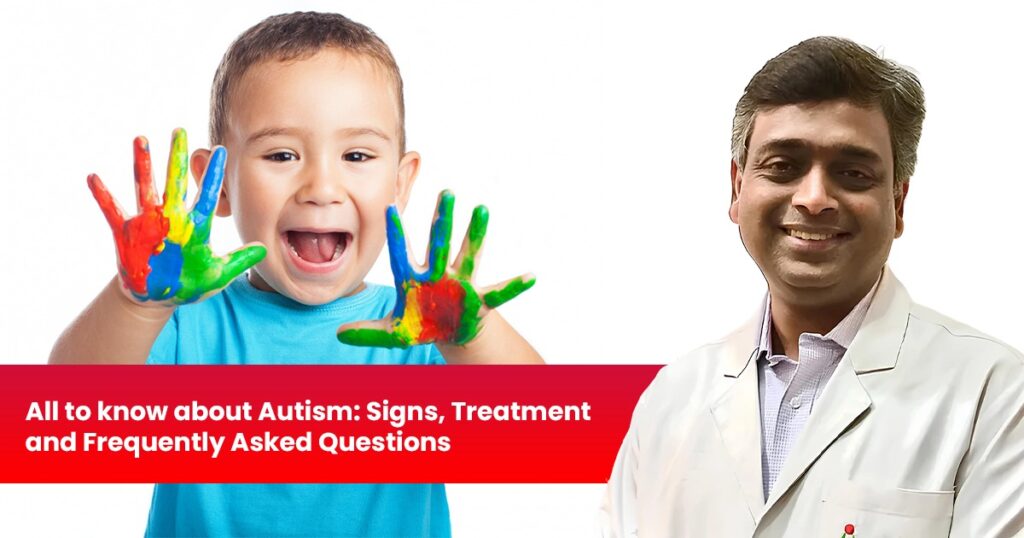
For parents seeking help and effective treatment for their children with autism, the Child Neurology Center in Gurgaon offers expertise and comprehensive care. Under the guidance of Dr R.K. Jain, a renowned child neurologist, this center specializes in diagnosing and managing autism in children. Thus helping children and their families to lead healthy and happy lives.
Testimonials from Satisfied Parents
Numerous parents have shared their success stories after seeking treatment at the Child Neurology Center in Gurgaon. They have witnessed remarkable improvements in their child’s development and are proud of their decision to seek help there. The center’s holistic approach, which includes behavioural therapy, medication management, and parental support, has yielded positive results resulting in a bright future for the child and smiles across all family members.
Answer to some Frequently Asked Questions about Autism
Let’s address some frequently asked questions about autism to understand it even better:
1. What are the 5 symptoms of autism?
- Social interaction difficulties
- Communication challenges
- Repetitive behaviours
- Sensory sensitivities
- Delayed speech development
2. How does autism behave?
- Autism behaviours vary but often include challenges in social interactions, communication, and repetitive behaviours.
3. What are the 3 main characteristics of autism?
- Difficulties in social interaction
- Communication challenges
- Repetitive behaviours
4. Is autism a disease or not?
- Autism is not a disease; it is a neurodevelopmental condition.
5. How can autism start?
- Autism typically manifests in early childhood, with signs becoming noticeable around 2-3 years of age.
6. How is autism caused?
- The exact cause of autism is not known, but it is believed to result from a combination of genetic and environmental factors.
Conclusion
Understanding the signs, treatment options, and where to seek help for autism is of absolute importance for parents and caregivers. Every child with autism is unique, and early intervention can make a profound difference in their journey toward a fulfilling life. The Child Neurology Center in Gurgaon, led by Dr R.K. Jain, is a trusted destination for parents seeking effective treatment and support for their children with autism. Remember that with the right resources, expert guidance, and early intervention, children with autism can make significant progress and achieve their full potential to always stay ahead in the race of life.